
Your home is not the state’s spare room
Housing justice is easy to promise with someone else’s keys. Independent hospitality should challenge the politics that turns private owners into a substitute for public responsibility.
2026-11-16 · OPINION · MATTEO CERRI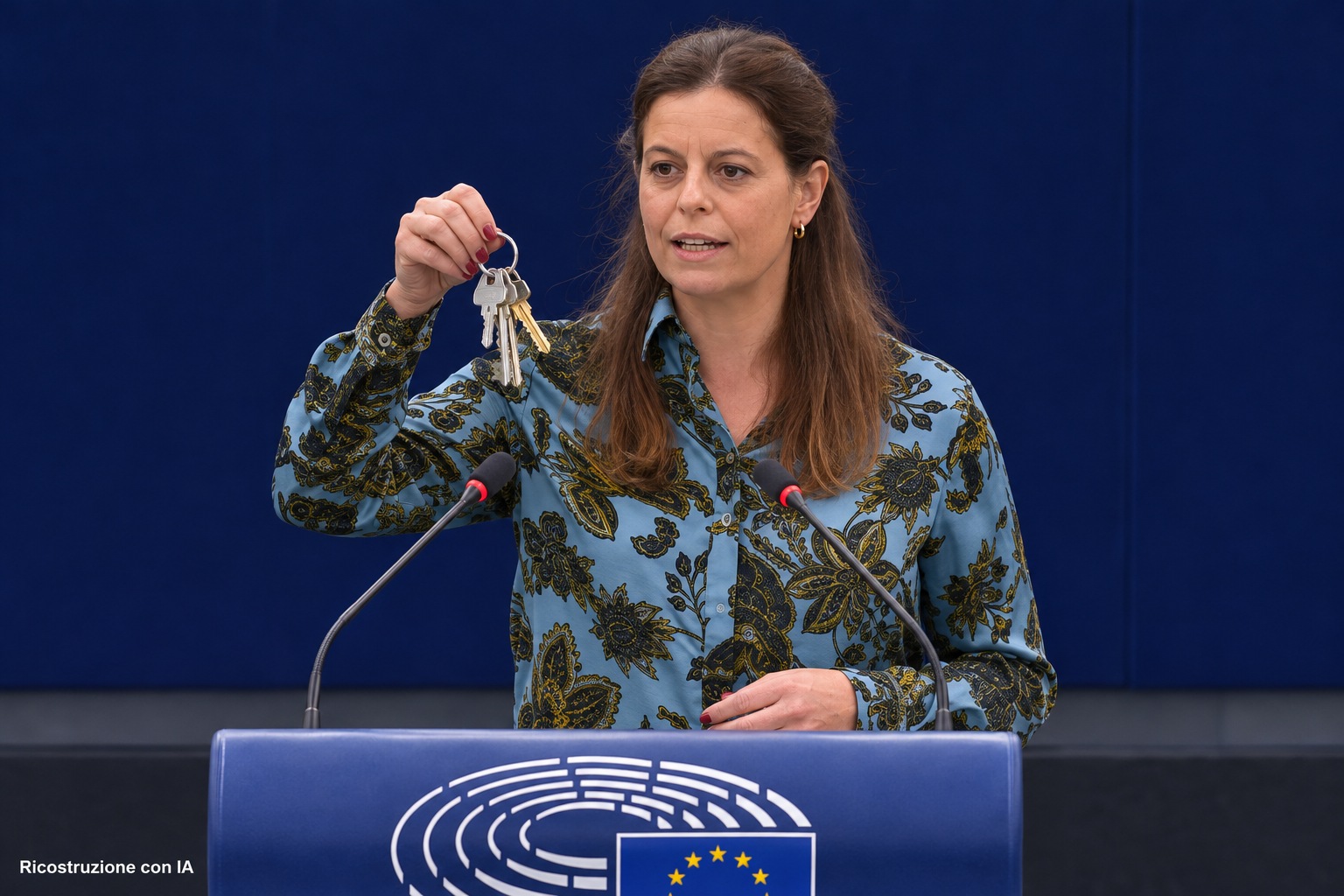
It is remarkably easy to promise housing justice when somebody else owns the house. The public authority keeps its moral authority; the private owner supplies the accommodation, carries the risk and waits for a solution. Call it solidarity often enough and the unpaid bill starts to sound like a virtue.
The dispute over short-term rentals exposes a deeper political choice. Do we treat ownership as a right exercised under clear, proportionate rules, or as a provisional permission that politicians can renegotiate whenever public policy fails? The Guest Journal takes a side: freedom within the law, and public institutions accountable for the housing responsibilities they claim.
The 16 November European Parliament hearing brought that divide into focus. AIGAB president Marco Celani argued that Italian housing stress has structural causes and that restrictions on short stays cannot substitute for more accessible housing. His association’s national figures deserve scrutiny: a small share of the national housing stock can still be highly concentrated in a particular neighbourhood. Evidence is a method, not a badge that a trade association can award itself.
But Ilaria Salis’s wider public position deserves equal scrutiny. In an interview with Fanpage, she argued that, where an occupant is in need, eviction should take place once alternative accommodation has been found. That sounds compassionate until we ask who finances the interval. If the public system cannot provide an alternative, the owner is left carrying the consequences. The compassion is announced in public; its costs arrive at a private address.
Salis has also used the phrase ‘parasitic income’ in her criticism of housing rents. We reject that moral shortcut. An investment fund, a retired couple letting an inherited flat and an owner restoring a neglected house are different actors. A serious debate can examine market power, concentration and abuse without treating the receipt of rent as evidence of a character defect.
For independent hospitality, this matters well beyond a political exchange. A place to stay exists because someone buys or inherits a building, repairs it, equips it, maintains it and accepts the uncertainty of welcoming paying guests. Income has to cover those commitments. Condemn the income while taking the investment for granted, and you have a slogan rather than an operating model.
The homeowner is not the state’s spare room. A private balance sheet is not an emergency housing budget awaiting ministerial instructions. Where society decides that a particular intervention serves a public purpose, it should state that purpose, justify the burden, establish the safeguards and confront the cost. Moral indignation is no substitute for doing that work.
Italy’s Constitution does not make property absolute. Article 42 recognises private ownership, provides for its social function and allows expropriation in legally defined cases, for reasons of general interest and with compensation. That framework is more demanding than either ‘owners can do anything’ or ‘housing need overrides everything’. We should argue within it, rather than pretend that invoking social justice settles every competing right.
Nor should our industry pretend that every holiday rental benefits its surroundings. Neighbours are entitled to safety, sleep and functioning shared spaces. In a pressured rental market, converting homes to visitor accommodation warrants careful local examination. We support enforceable standards, transparent registration and restrictions whose necessity and effects can be demonstrated. Ownership is not a licence to impose costs on everyone nearby.
Yet a central-city apartment and a long-empty house in a depopulating town cannot sensibly be governed by the same political diagnosis. Temporary visitors may compete with residents in one location; elsewhere, they may help justify restoring a building that has attracted neither a buyer nor a permanent tenant. Those are questions to investigate locally. Neither a national average nor an angry generalisation can answer them.
The test for a restriction should be brutally practical. How many additional homes become available for residents? At what rents? What happens to maintenance, investment, visitor capacity and local businesses? Are the gains sustained, and who bears the costs? We will not repeat the industry claim that restrictions always fail. We will not accept a politician’s assumption that restricting owners must therefore help tenants, either.
Governments have harder work available: bring unusable public homes back into service; fund accessible housing; connect affordable areas to jobs; and make residential letting a credible proposition for both parties. None is as theatrical as identifying an owner and demanding a sacrifice. All require institutions to deliver something measurable.
Housing insecurity is real. It deserves more than being deployed as a moral warrant to make private citizens absorb indefinite public failures. A state serious about the social contract must budget for its promises and accept scrutiny of its results. It cannot simply borrow a homeowner’s keys and congratulate itself on its generosity.
For us, the line is clear. Regulate harm. Prove necessity. Respect ownership. Build the public response. Your home is not the state’s spare room—and independent hospitality should stop apologising for expecting the distinction to matter.
Reading notes.
- Opinion by Matteo Cerri for The Guest Journal.
- Salis’s statements about eviction and rental income come from separate public interventions; they are not presented as verbatim remarks from the 16 November hearing.
- The lead image is an AI reconstruction of a documented earlier gesture, not a photograph from the hearing.
Sources & verification.
- AIGAB — Marco Celani’s published hearing statement, 16 November 2026 ↗ · Checked 2026-11-16
- Fanpage — direct interview with Ilaria Salis on rents, ownership and eviction ↗ · Checked 2026-11-16
- Agenzia Vista / Quotidiano Nazionale — Salis’s keys gesture and criticism of rental income, October 2026 ↗ · Checked 2026-11-16
- Italian Senate — Constitution, Article 42 ↗ · Checked 2026-11-16
Opinion editorial by Matteo Cerri. Cerri works in property regeneration and relocation through ITS ITALY and has a commercial interest in the sector discussed. The article separates reported public statements from editorial judgement. No original photograph, eyewitness attendance or complete verbatim transcript of the 16 November exchange is claimed.