
What does it mean to host someone well?
A new Italian book on artist residencies asks what happens between providing a place to stay and building a relationship with the place itself.
2026-11-17 · MARKET ANALYSIS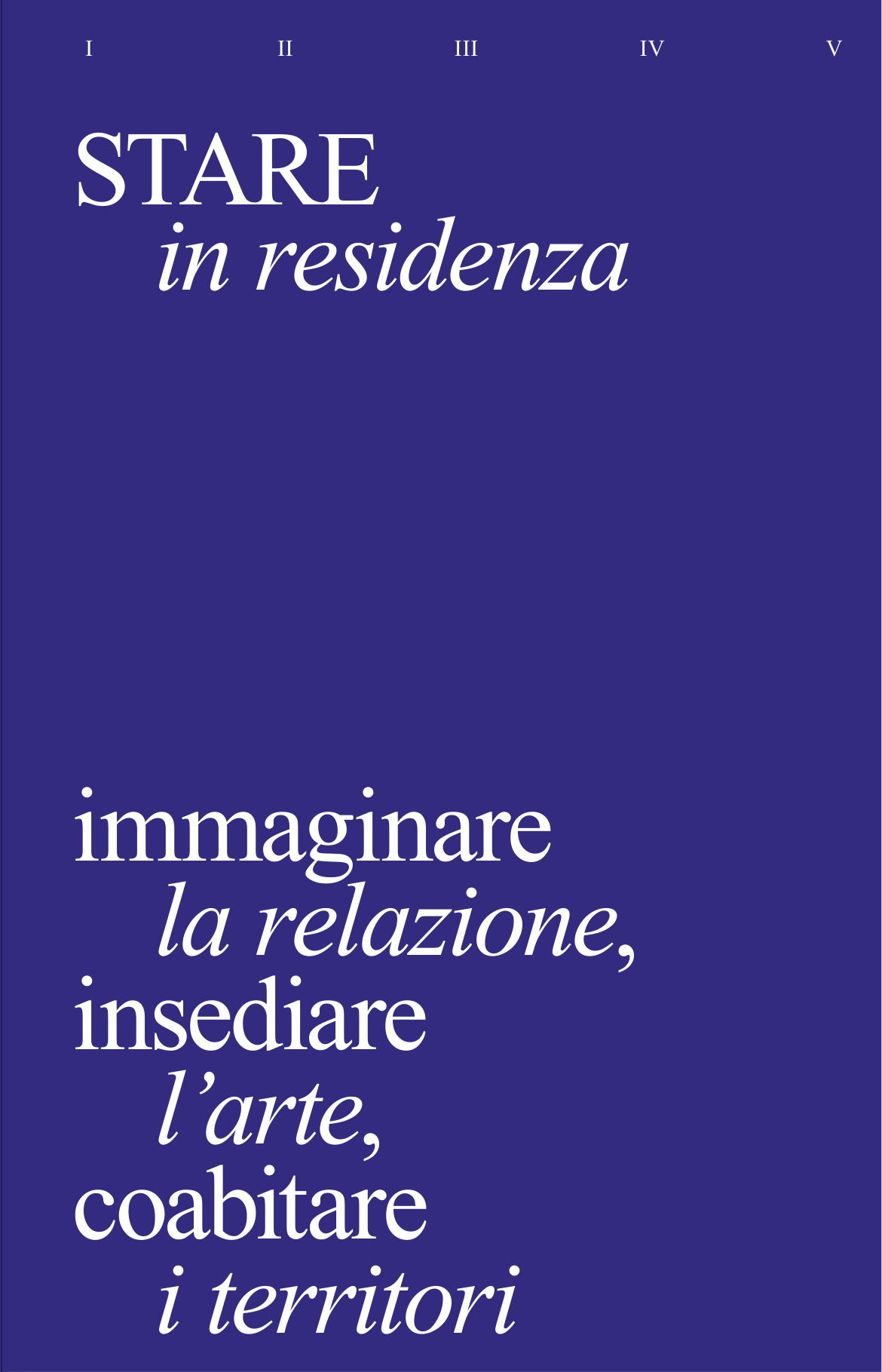
A room can be ready long before a place is ready to receive someone. The bed is made, the key is handed over, the practical arrangements work. What follows is less easily organised: understanding how people live, recognising whose knowledge matters, discovering when an invitation is welcome and when a little distance would be kinder.
Artist residencies bring these questions into unusually sharp focus. Someone arrives to work, often for a limited period, in a place where other people have established lives. The host provides access to a setting as well as accommodation. That creates possibilities, but it also creates responsibilities on both sides.
This is the territory explored by STARE in residenza. Immaginare la relazione, insediare l’arte, coabitare i territori, edited by Paolo Mele and Pasquale Campanella, with editorial coordination by Nicola Guastamacchia. Published in Italian by Viaindustriae Publishing, the 144-page book is the first volume promoted by STARE, the association of Italian artist residencies.
According to its presentation materials, the publication draws on three gatherings in Latronico, Rome and Castrignano de’ Greci. It brings essays, testimony and institutional and economic perspectives together through five themes: residing, taking root, relating, regenerating and engaging with institutions. The range matters. Hospitality appears here within a wider discussion of work, knowledge and the conditions that allow relationships to develop.
For anyone involved in welcoming people, there is a useful question in that approach: how much room does an arrival leave for the people already there? Introducing a guest to a craftsperson, an artist or a neighbour should involve an invitation that both parties can accept. Local life does not become a service simply because someone is interested in experiencing it.
The distinction is particularly relevant when a stay extends beyond a holiday. Time can make a relationship possible, but duration alone does not produce one. A longer visit may remain entirely self-contained. A shorter encounter may lead to something that continues after departure. Much depends on the people doing the connecting, on expectations being made clear and on the freedom to decline.
Artist residencies have their own purposes and professional requirements; they should not be treated as a format that any accommodation business can reproduce by adding a studio. Their questions can nevertheless sharpen the way hospitality is discussed. Who has prepared the encounter? Who is paid for that preparation? What happens when the guest leaves?
The book will be presented on 24 November 2026 at 6.30pm, at the Accademia di Belle Arti di Roma, Largo Dino Frisullo, Aula 1 A. For readers interested in how temporary stays become part of a place’s life, it offers a timely point of departure: welcoming someone means thinking beyond the moment of arrival.
Reading notes.
- Book in Italian; 144 pages.
- Presentation: 24 November 2026, 18:30, Accademia di Belle Arti di Roma, Largo Dino Frisullo, Aula 1 A.
The book
Prepared from the promoter’s press release and book information sheet received on 17 November 2026; not a review of the full volume.