
Sometimes they come back to live. We still ask when the holiday ends.
A returning Italian may be looking for a school, a neighbourhood and a working life. A good welcome begins by asking what brings someone back.
2026-11-15 · MARKET ANALYSIS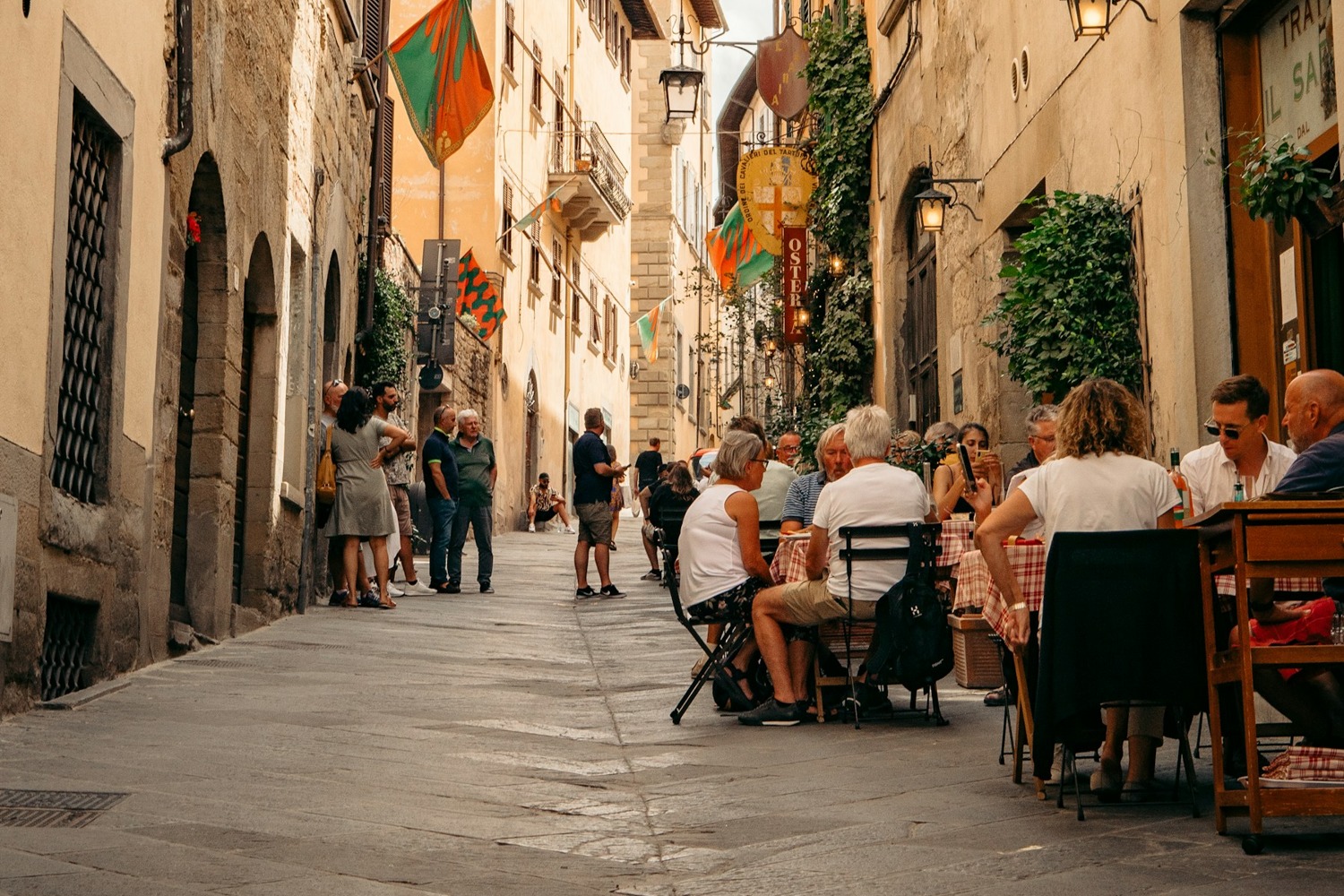
“How long are you here for?” is a perfectly reasonable question to ask a visitor. It becomes a different question when the person answering has come back to live. The welcome can be warm, the table familiar, the conversation affectionate—and the assumption still be that this is another holiday.
For The Guest Journal, the interesting moment is the change in the relationship with a place. Someone who returns after years abroad may recognise the street, know the food and speak the language. They may also be looking for a school, a workable home, professional contacts or a life in which their partner can feel at ease. Familiarity and settling in do not arrive as a single package.
This is the lens through which we read A volte ritornano, the fourth NOMAG Research Book, published by NOMAG and ITS ITALY with research coordination by Matteo Cerri. Its fifty questions examine Italians’ return experiences through work, housing, personal income, family, services, expectations and future plans. The book is currently available in Italian only.
The study’s main analytical base comprises 708 participants recruited through a voluntary network. At the time of the survey, 498 were living in Italy, 121 were abroad again and 89 were living across countries. This is an exploratory investigation, not a nationally representative survey. Those figures cannot establish Italy’s national rate of leaving again after a return.
They do give us several forms of return to think about. Someone can settle for the long term, divide life between countries or move again after a worthwhile period in Italy. None of those situations can be understood fully by asking when the next flight leaves.
The habits of hospitality can help explain the transition. A host knows how to make an arrival easier: clear directions, an honest account of the surroundings, a useful introduction. For someone exploring a permanent move, local knowledge can have a different purpose. The useful conversation may concern the neighbourhood outside the holiday season, access to everyday services or where people actually meet. These are questions we propose to hosts and communities, rather than measured findings about the hospitality sector.
Temporary accommodation can provide time to learn about a place before making a longer commitment. That possibility does not turn a holiday rental into a relocation service, nor does it justify promises a host cannot keep. It asks for a little curiosity about the person staying: what brings them here, and what information would genuinely help?
There is also a household to consider. One person may be returning to Italy while their partner is arriving in a new country. Children may know a place through summer visits and now need to make friends there in November. The phrase “coming home” can describe different experiences under the same roof.
For a publication interested in places that are lived in, this belongs alongside our stories about stays and destinations. A town’s appeal includes its welcome, but also the relationships and routines that can develop after it. Recognising that someone is trying to become a neighbour changes the conversation.
A volte ritornano brings together response distributions, charts, commentary and references to the existing literature. The aggregate data suggest questions for further investigation; they do not establish correlations between individual answers. The book gives structure to a discussion that can otherwise remain trapped between the holiday postcard and a universal verdict on whether moving back was a good idea.
Our invitation is smaller and more practical: the next time someone returns, ask what they are building here. They may have come for a visit. They may also be trying to make an ordinary life. A good welcome leaves room for both.
Reading notes.
- The book is currently available in Italian only.
- Exploratory research through a voluntary network; the main analytical base is 708 participants.
- The photograph shows a real street scene in Arezzo. No person pictured is identified as a returnee or research participant.
Sources & verification.
- A volte ritornano — book information and available editions ↗ · Checked 2026-11-15
- Kindle edition — A volte ritornano (Italian) ↗ · Checked 2026-11-15
Editorial reading of a book published by NOMAG and ITS ITALY, within our publishing network. Hospitality observations are editorial interpretation, not findings from a survey of accommodation operators. The real archive photograph provides context; no editorial visit or participant identity is claimed.