
Merano, between the arcades and the river.
A walk through trade, resort architecture and the changing scale of the city.
2026-11-17 · SOURCED DISCOVERY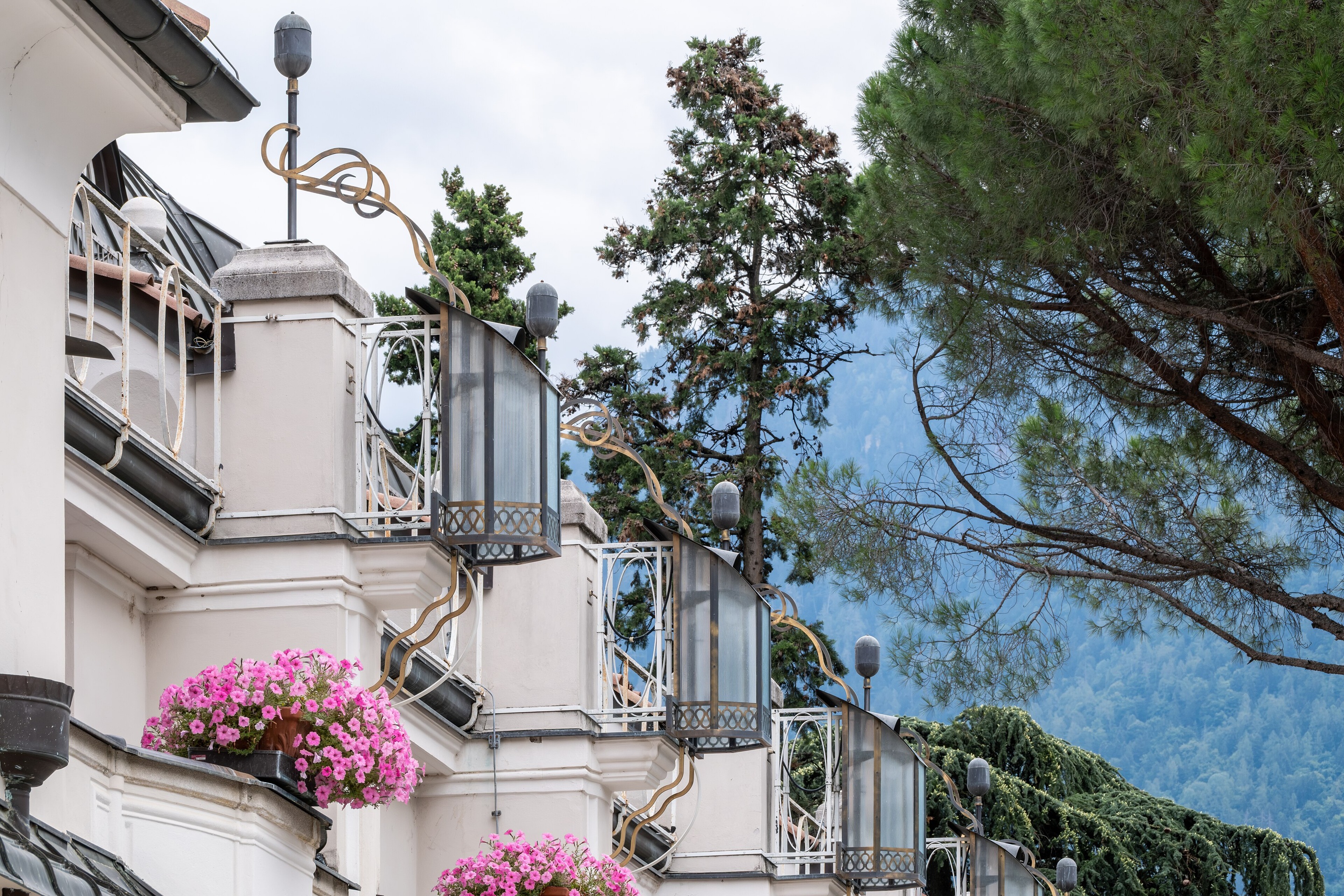
Merano can be read as a city of two kinds of shelter. Beneath the Portici, the street draws people close to windows, doorways and shopfronts. Beside the Passirio, the view opens out and buildings address the promenade. Moving between the two offers an architectural afternoon with its own rhythm, without turning the city into a waiting room for the next mountain excursion.
The official tourism account dates the commercial route of the arcades to the thirteenth century and Meinhard II. It links Piazza del Grano with Piazza Duomo and describes a sequence of façades, projecting windows and shaded arches. The appeal for a visitor is in that continuity between commerce and architecture: an inhabited shopping street, where looking at a building and going inside a business can belong to the same walk.
The riverfront changes the scale. The tourism office describes the Passer Promenade along the river’s right bank, with the Kurhaus as an architectural focus and the Human Figures artworks farther along. That suggests an alternative to rushing between named sights: choose a stretch, pause where a façade or artwork catches your attention, and let the city supply the connections. The photograph shows an architectural detail of the Kurhaus on 18 September 2026; it does not document today’s conditions.
For a longer visit, the Tappeiner promenade is a separate possibility to research. Its official account identifies the physician Franz Tappeiner as the creator who donated the walk to the city. The distinction is useful when choosing where to stay and how to divide the day: the riverside and the hillside should not be treated as interchangeable walking conditions. Before setting out, check the approach, the surface and the route that suits your needs rather than relying on the general reputation of Merano as an easy place to stroll.
The arcades page gives more specific access information than a postcard does: it describes the upper Portici as accessible to wheelchairs and pushchairs, notes the incline towards Piazza Duomo and says there is no tactile guidance system. This is the operator’s published guidance, not our access inspection. Anyone planning around a particular mobility requirement should confirm the whole route, including their arrival point, with the tourist office.
The reason to spend time here is the change in urban mood within one visit: sheltered trade, public architecture and the open riverbank. It is an invitation to look at how a resort town actually works, rather than a promise that every café, shop or attraction will be open. Our selection is based on published sources and leaves room for a visitor’s own discoveries.
Before you go.
- Merano/Meran, South Tyrol.
- The Portici and riverside can form a city visit; research the Tappeiner route separately.
- Confirm specific accessibility needs and current conditions with the tourist office.
- The official Tappeiner page currently lists the Via Verdi/Silvana hill entrance as closed until further notice.
Sources & verification.
- Merano tourism · The Arcades ↗ · Checked 2026-11-17
- Merano tourism · The Passer Promenade ↗ · Checked 2026-11-17
- Merano tourism · Tappeiner promenade ↗ · Checked 2026-11-17
Independent desk research, sources checked and first published 17 November 2026. No editorial visit, paid placement or current access inspection. Archive photograph with the credit and licence shown.